
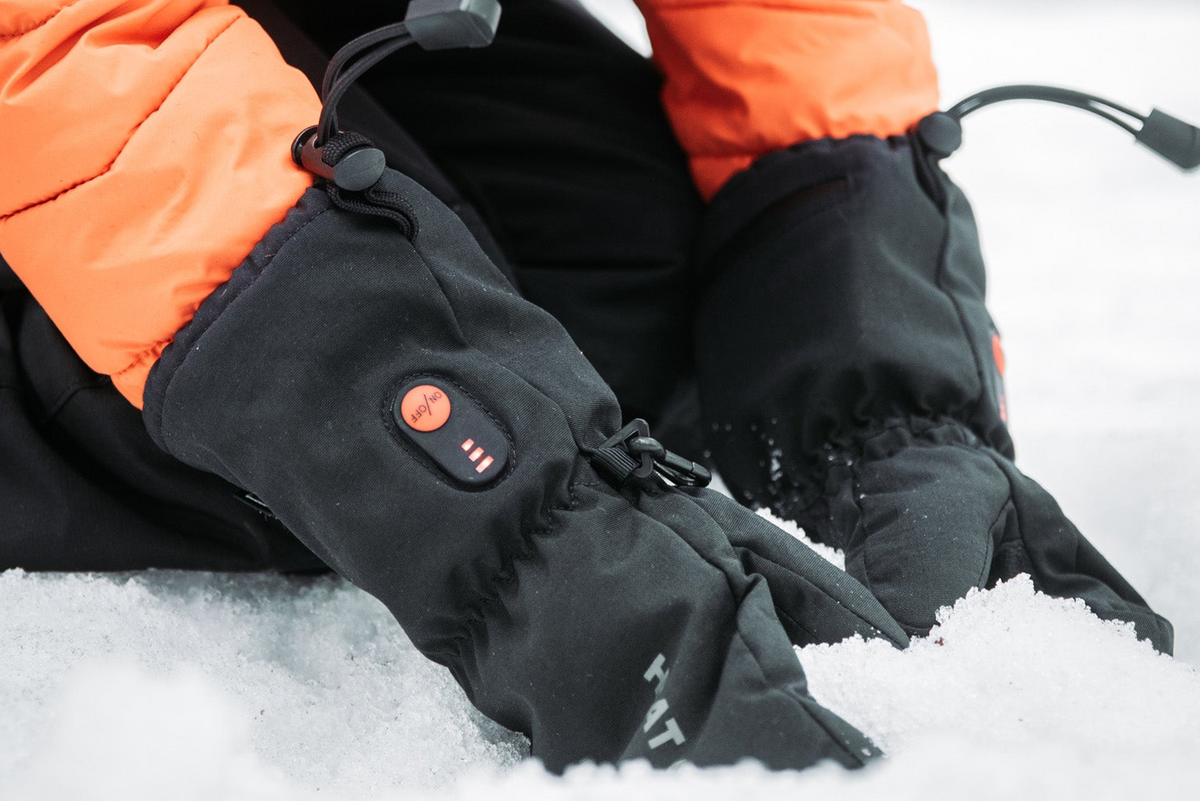
If you are outside often in winter, rechargeable heated gloves are the better choice: the heat covers the back of the hand and the fingers, you choose the level, and you recharge the same batteries all season. Disposable hand warmers still make sense for occasional outings or as a backup in a pocket.
Here is a fair comparison so you can decide for your own winter.
How each one works
Disposable hand warmers are small air-activated packets. Once opened, a chemical reaction produces heat until the contents are used up. You cannot switch them off or turn them up, and each packet is used once.
Heated gloves have thin heating elements built into the glove, powered by a rechargeable lithium battery in the cuff or wrist pocket. On Heat Up gloves, one button chooses between 3 heat levels. When you go back inside, you turn them off and recharge the batteries for next time.
Where the heat goes
A hand warmer heats one spot, usually the palm or the inside of a pocket. Fingers, the first part of the hand to go numb, often stay cold. Heat Up heated gloves place the heat over the back of the hand and along the fingers, where you lose heat fastest. The insulation keeps that heat in.
How long the heat lasts
Disposable warmers last several hours once opened, depending on the brand, and you cannot pause them. Heat Up gloves run up to 10 hours on low (Mountain and Peak), about 4 to 6 hours on medium and 3 to 5 hours on high. The Active gloves run up to 8.5 hours on low. You can switch them off between runs or at lunch and keep the rest of the charge for later.
Control
With a warmer, the heat is whatever the packet gives you. With heated gloves you start on high to warm up, then drop to low or medium to make the battery last. That control matters when the temperature changes during the day or when you go from standing still to moving.
Cost over a season
A pair of disposable warmers costs little, but you buy new ones every outing. Over a season of weekly ski days, outdoor work or ice fishing, those packets add up. Heated gloves cost more up front, then the only thing you pay for is a little electricity to recharge them. If you only go out a few times a winter, warmers may cost less. If you are out every week, heated gloves usually make more sense.
Waste
Every used warmer packet ends up in the garbage. Rechargeable batteries are reused all season and beyond. If you want to replace or add batteries, Heat Up sells battery and charger kits for each product family, so you do not need to replace the gloves.
When hand warmers still make sense
- You go out a few times a year and do not want to charge anything.
- You want a backup in a pocket on a very long day.
- You need heat somewhere without a heated garment, like a sleeping bag or a boot without heated socks.
For cold toes, the same logic applies: the Merino Wool+ Heated Socks heat the toes and the top of the foot for up to 11 hours on low, with a remote control, instead of a toe warmer that slides around in the boot.
The bottom line
Choose disposable warmers for occasional use. Choose heated gloves if cold hands regularly cut your days short. Not sure which model? Read our guide on how to choose heated gloves, or contact our team in Québec at support@heatup.ca.
FAQ
Are heated gloves worth it compared to hand warmers?
If you are outside every week in winter, usually yes. The heat covers the back of the hand and the fingers, you can adjust or switch it off, and you recharge the same batteries instead of buying new packets.
Do heated gloves still keep my hands warm if the battery dies?
Yes. Mountain and Peak gloves are insulated like regular winter gloves, so they keep the heat in even with the battery off. You just lose the extra heat.
Can I put a hand warmer inside heated gloves?
We do not recommend it. The gloves already heat the hand, and there is no need to add another heat source near the heating elements and the battery pocket.
How Long Do Heated Gloves Last in the Cold? Runtime by Heat Level
How to Choose Heated Gloves: Mountain, Peak, Active or Mittens