
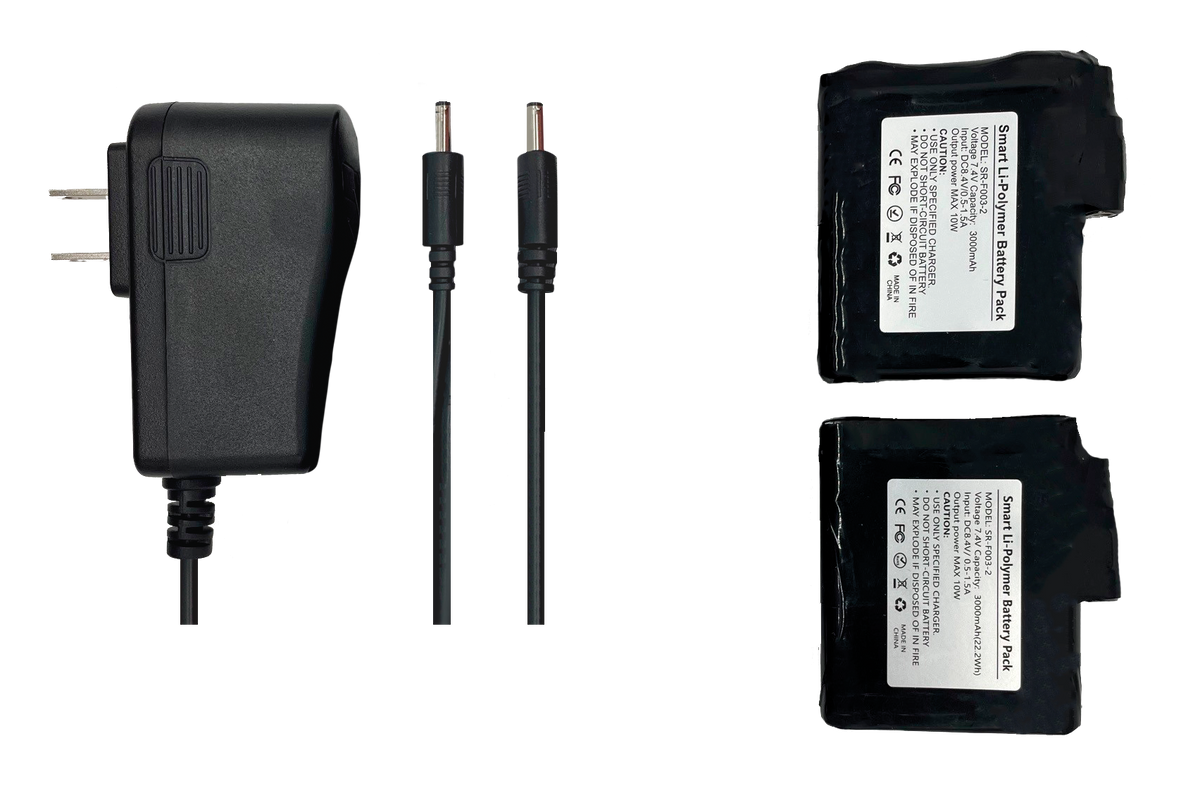
Yes, you can fly with Heat Up heated gloves, mittens, socks and vests on Canadian flights. Pack spare batteries and the vest power bank in your carry-on bag, never in checked luggage, with the terminals protected. All Heat Up batteries are well under the 100 Wh limit that applies to most travellers.
Rules can change and vary by airline, so always confirm with your airline before you fly.
How many watt-hours are Heat Up batteries?
Airline limits are expressed in watt-hours (Wh). To calculate them, multiply the voltage by the capacity in amp-hours (mAh ÷ 1,000).
| Battery | Used in | Calculation | Watt-hours |
|---|---|---|---|
| 7.4 V, 3,000 mAh | Mountain and Peak gloves, mittens, Junior mittens | 7.4 V × 3.0 Ah | 22.2 Wh |
| 7.4 V, 2,600 mAh | Merino Wool+ Heated Socks | 7.4 V × 2.6 Ah | 19.2 Wh |
| 7.4 V, 2,200 mAh | Active gloves, Junior socks | 7.4 V × 2.2 Ah | 16.3 Wh |
| 10,000 mAh power bank | Heated vests and bermuda shorts | Usually rated at 3.7 V | About 37 Wh (check the label) |
Power banks of this size are typically about 37 Wh, but the exact rating is printed on the power bank itself. Bring it as is so security staff can read the label.
What the rules say
According to the Canadian Air Transport Security Authority (CATSA) battery guidelines:
- Lithium batteries of 100 Wh or less inside a device are allowed in carry-on and in checked baggage.
- Spare lithium batteries of 100 Wh or less are allowed in carry-on. In checked baggage they are permitted only with the airline's approval.
- Spare batteries must be protected from short circuits: original packaging, a protective case, a separate plastic bag, or tape over the contacts.
- Many airlines follow IATA guidance, which typically allows power banks up to 100 Wh without special approval. Power banks go in carry-on, not in checked bags. Many airlines do not allow charging devices on board.
Air Canada, for example, accepts spare cells and battery packs in carry-on baggage only, up to 20 per passenger, each individually protected. Batteries between 100 and 160 Wh need the airline's approval, but none of the Heat Up batteries come close to that.
How to pack your heated gear
- Unplug the batteries from the gloves, mittens or socks so they cannot switch on in your bag.
- Put each battery in its own pouch or a small plastic bag, or put tape over the connector.
- Keep the batteries and the power bank in your carry-on, in a spot you can reach at security. The gloves, socks or vest themselves can travel in either bag.
- If your carry-on is checked at the gate (common on small planes), take the batteries and power bank out first and keep them with you in the cabin.
- Bring the charger if you will need it at destination. It is a regular wall charger and travels like any other.
Flights to the United States and abroad
Most airlines apply the same international standards for lithium batteries, but some are stricter about power banks, especially using or charging them during the flight. Check your airline's dangerous goods page before you leave, and follow the crew's instructions on board.
Arriving somewhere cold
Charge the batteries fully at your hotel the night before your first day out. Recharging takes about 4 hours for most gloves, mittens and socks, about 6 hours for the Active gloves, vests and bermuda shorts. See our guide on runtime by heat level to plan a full day.
FAQ
Can I put heated gloves in my checked bag?
The gloves themselves, yes. Take the batteries out and carry them in your carry-on. Spare lithium batteries are permitted in checked baggage only with the airline's approval.
Do I need airline approval to fly with Heat Up batteries?
Not usually. Heat Up batteries are between 16.3 and 22.2 Wh, and the vest power bank is about 37 Wh, all under the 100 Wh threshold. Approval is needed for batteries between 100 and 160 Wh. Always confirm with your airline.
Can I use my heated vest power bank during the flight?
Many airlines do not allow charging devices on board, and rules on using power banks vary. Follow your airline's policy and the crew's instructions.
How should I protect spare batteries?
Keep each battery in its original packaging, a protective case or a separate plastic bag, or put tape over the contacts to prevent short circuits.
Sources: CATSA, Guidelines for batteries · Air Canada, Special items: restricted and prohibited. Last checked November 2026.
How to Wash Heated Socks and Gloves (and Store the Batteries)
How Long Do Heated Gloves Last in the Cold? Runtime by Heat Level